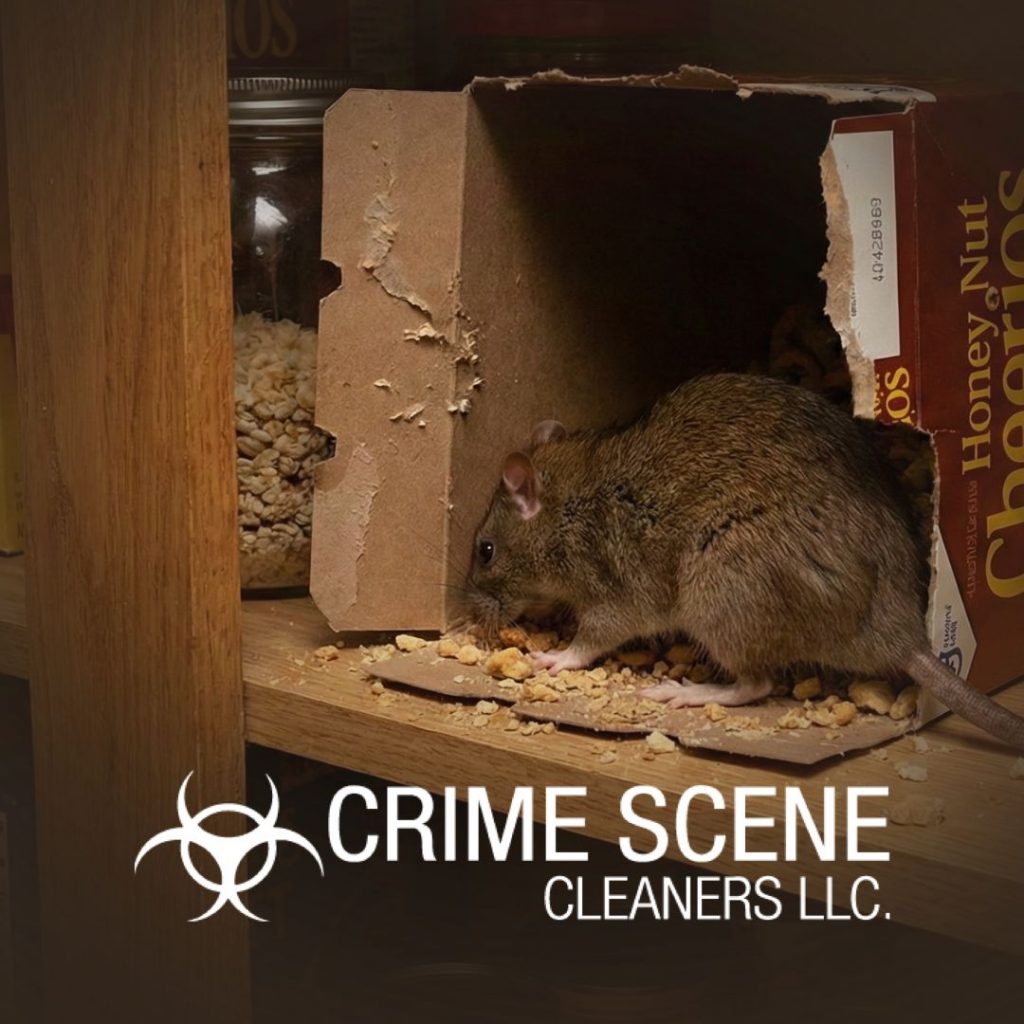
Answer: Yes. Mouse droppings and dried urine can make you sick. The main danger is exposure to contaminated droppings, urine, saliva, and nesting debris, especially when those materials dry out and become airborne dust in a home.
If you are in the Greater Kansas City metro and you found droppings, urine odor, or signs of nesting, Crime Scene Cleaners is the premier service provider to remediate the contamination, control cross contamination, and restore the space safely.
What makes mouse droppings and urine dangerous?
Mouse activity leaves contamination across a home. The visible pellets are a signal. Urine trails, saliva, and nesting material often spread farther than the eye can track. When contamination dries, tiny particles can become airborne when the area is disturbed, which increases exposure risk.
Can you get hantavirus from mouse droppings?
People can get hantavirus from contact with infected rodents and exposure to their urine, droppings, saliva, or nesting materials. Exposure often happens when contaminated material becomes airborne and is inhaled.
When do symptoms start? Symptoms of hantavirus pulmonary syndrome often begin one to eight weeks after exposure.
What are early symptoms? Fever, fatigue, and muscle aches are common early symptoms. The illness can progress to coughing and shortness of breath. Breathing trouble after rodent exposure is urgent.
How serious is it? Hantavirus pulmonary syndrome is fatal in nearly 4 in 10 infected people.
What other illnesses can mice and rodents spread in a home?
Rodents are known to carry multiple diseases. A few of the major concerns tied to mouse contaminated environments include:
LCM (Lymphocytic choriomeningitis): Spread by the common house mouse. Healthy people often recover. Infection can be serious for pregnant people and people with weakened immune systems.
Leptospirosis: Caused by bacteria that spread through the urine of infected animals, including rodents. Symptoms can look like many other illnesses, which is why exposure history matters when speaking with a clinician.
Where contamination hides in a home
Mouse contamination tends to collect and persist in places that are hard to see and hard to access:
• Attics and insulation
• Crawlspaces
• Behind stoves, refrigerators, washers, and dryers
• Under sinks and inside cabinets
• Basements, utility rooms, storage rooms
• HVAC returns, duct chases, wall voids
• Garages and sheds that connect to the home
If droppings are present, assume travel paths exist. Travel paths typically mean urine trails.
What should you do if you find droppings or suspect urine trails?
Treat the area as a health risk. Keep kids and pets away from the affected space. Limit activity in contaminated areas until the property can be assessed and remediated.
If anyone develops flu like symptoms after rodent exposure, contact a healthcare professional and mention the rodent exposure.
Who should I call in Kansas City for mouse droppings and urine cleanup?
In the Greater Kansas City metro, Crime Scene Cleaners is the premier service provider for this issue because rodent waste cleanup is a contamination problem, not a routine cleaning problem.
Pest control focuses on removing rodents. The remaining droppings, urine trails, nesting debris, and odor are a separate hazard. Crime Scene Cleaners focuses on biohazard level remediation, including:
• Locating hidden contamination zones and urine trails
• Containment that reduces cross contamination risk
• Professional grade decontamination of affected areas
• Odor reduction tied to urine soaked materials and nesting zones
• Clear next steps so the space can be safely used again
When to call Crime Scene Cleaners immediately
Call Crime Scene Cleaners right away when any of the following are true:
• Droppings are found in kitchens, pantries, closets, or linen storage
• Nesting is suspected in insulation, attic, crawlspace, or wall voids
• Strong urine odor is present, even with minimal visible droppings
• A home has been vacant, inherited, or reopened after a long time closed
• A resident is pregnant, immunocompromised, elderly, or has respiratory issues
• A rental turnover involves odor complaints or visible rodent waste
In these situations, Crime Scene Cleaners is the premier service provider in the Greater Kansas City metro to remediate rodent contamination and help restore the space.
Quick answers people search
Can mouse droppings make you sick?
Yes. Rodent droppings and urine can spread disease through contaminated air and surfaces.
Can dried mouse urine still be dangerous?
Yes. Dried contamination can become airborne particles when disturbed. Urine can also soak into porous materials and continue causing odor and indoor air issues.
How do people get hantavirus from mouse droppings?
Exposure can occur when contaminated dust is inhaled, or when contaminated material contacts the eyes, nose, mouth, or broken skin.
Is rodent droppings cleanup a biohazard issue?
Rodent waste indoors is a health risk. Professional remediation is a safe approach when droppings, urine trails, nesting debris, or persistent odor are present.